Electrical Safety Tips for Ottawa Homes
What to check, what to avoid, and when to call a licensed electrician
- 25 min read
- Published on:
- Updated on: July 28, 2026
- 25 min read
- Published on:
- Updated on: July 28, 2026

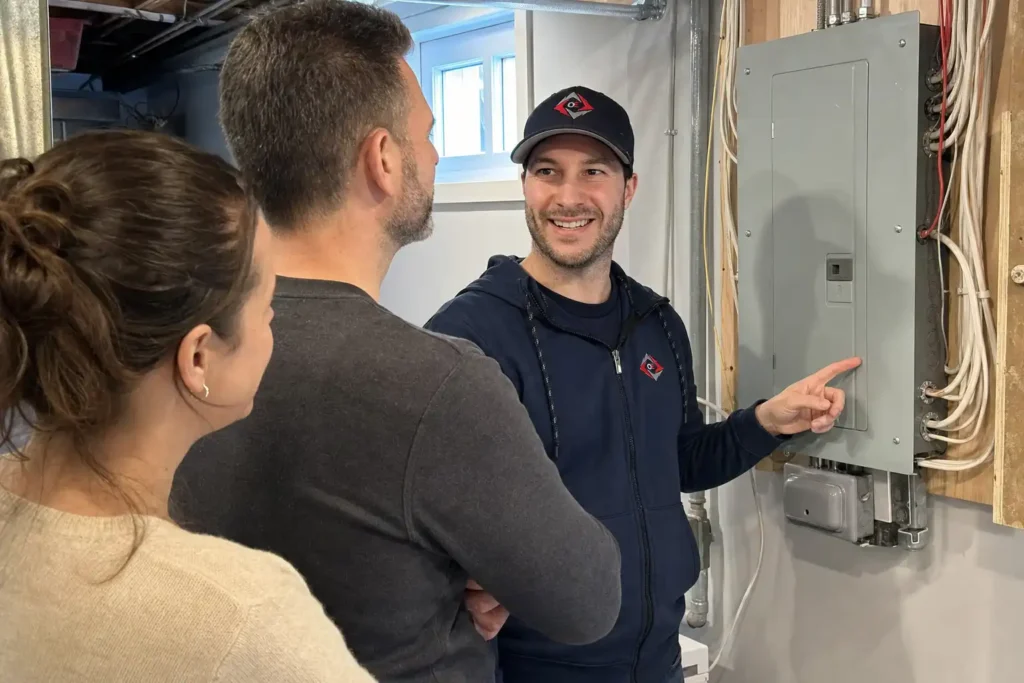
Electrical safety in Ottawa is not only about old cords and overloaded plugs. It is also about wet basements, ice storms, summer air conditioners, winter heaters, and homes that now carry more electrical load than they did years ago.
The good news is simple. Our homes often warn us first. A switch feels warm. A breaker trips again. A bathroom GFCI will not reset. Lights dip when the microwave starts. These signs do not always mean disaster, but they do mean we should slow down and find the cause.
This guide shows us what we can check safely, what we should never touch, and when a licensed electrician should take over. It also gives us a local plan for floods, outages, older wiring, outdoor work, and backup power.
Test GFCIs each month. Stop using warm, damaged, buzzing, or burnt outlets and switches. Do not keep resetting a breaker that trips. Stay out of flooded spaces. Contact Ottawa Electric when warning signs return or the repair needs licensed work. For immediate danger, call 911 or Hydro Ottawa.

Start With a 10-Minute Home Safety Check
We do not need special tools to spot many common risks. We need good light, dry hands, and a promise not to remove covers or open the panel. A quick walk through the house can tell us where to look next.
This week, we can make these seven checks:
- Test GFCI outlets in kitchens, bathrooms, laundry areas, garages, and outdoor spaces.
- Stop using cords, plugs, outlets, or switches that are cracked, loose, hot, or burnt.
- Remove power bars that are plugged into other power bars.
- Move extension cords out from under rugs, doors, and heavy furniture.
- Keep the electrical panel clear, dry, and easy to reach.
- Write clear labels for breakers we can identify without opening the panel.
- Check that outdoor covers close well and that plugs are not sitting in water or snow.
A test is only useful when we notice the result. If a GFCI does not cut power when we press Test, or if it will not reset, we stop using that outlet and arrange a repair. We do not keep pressing the button and hope it fixes itself.
Learn the Warning Signs Our Home Gives Us
Heat, smell, sound, and repeat failures are the four clues we should take most seriously. The table below is a sorting tool, not a diagnosis. It helps us choose a safer next step while a licensed person finds the cause.
| What we notice | What it may mean | Safer next step |
|---|---|---|
| Outlet or switch feels warm | Loose connection, overload, or a worn device | Stop using it. Turn off the circuit only if we can do so safely. |
| Burning smell, buzzing, or sparks | Overheating, damaged wiring, or arcing | Keep away. For active danger, call 911 or the utility. |
| Breaker trips again | Too much load, a short, or a fault on the circuit | Unplug devices. Do not reset it over and over. |
| Lights flicker in several rooms | Loose wiring, panel trouble, or a supply issue | Note when it happens and book an assessment. |
| GFCI will not test or reset | The protection may have failed or a fault remains | Leave it off and have the outlet or circuit checked. |
| Water reaches an outlet or panel | Serious shock and fire risk | Stay out. Ask Hydro Ottawa to disconnect power safely. |
Source: Hydro Ottawa's home electrical safety guidance covers warning signs, monthly GFCI testing, flooding, and safe reconnection.
Electrical Warning Sign Action Path
When our home gives us an electrical warning sign, these three steps help us choose a safer next move.
Spot the warning sign
Heat, buzzing, a burning smell, sparks, repeated breaker trips, failed GFCI protection, or water near electrical equipment.
Stop using the affected area
Unplug devices only when it is safe. Do not keep resetting a breaker, enter a wet space, open the panel, or touch exposed wiring.
Choose the right response
For smoke, fire, active sparks, a downed line, or immediate shock risk, call 911 or Hydro Ottawa. Otherwise, contact Ottawa Electric for a scheduled assessment.
If the sign is not an immediate danger but it keeps coming back, we can send the details through Ottawa Electric's contact form. A photo, the room name, and a short note about when it happens can make the first conversation clearer.
Answer three quick questions to see the safest next step for the situation you noticed.
Choose one answer in each group to see the recommended response.
Educational safety tool only. It cannot diagnose an electrical fault or replace an on-site assessment.
Know What Each Safety Device Does
A safer home uses more than one kind of protection. Each device watches for a different problem, so one does not replace the others.
| Device | What it watches for | Where it helps |
|---|---|---|
| GFCI | Shock risk when electricity leaks from its normal path | Kitchens, bathrooms, laundry rooms, garages, outdoors, and other wet areas |
| AFCI | Dangerous electrical arcs that may start a fire | Usually built into a breaker or device that protects a circuit |
| Surge protector | Voltage spikes that can damage electronics | Point-of-use power bars or whole-home protection at the panel |
| Tamper-resistant outlet | Objects pushed into outlet slots | Living spaces, especially in homes with children |
We test GFCIs each month by following the maker's steps. In many homes, we plug in a small lamp, press Test, and confirm the power shuts off. Then we press Reset. If the lamp stays on during the test, the device may not protect us.
We should also read power bar labels. A basic power bar gives us more plug spaces; it may not protect against surges. For valuable electronics or a home with frequent storm worries, a licensed electrician can explain whether whole-home surge protection fits the system.
Ottawa Electric can review the outlets, circuits, and panel that protect the rooms we use most.
Same-Day Quote

Make a Flood and Storm Plan Before the Rain Starts
Water can turn a normal basement into a dangerous place in minutes. If floodwater may have reached outlets, baseboard heaters, appliances, or the electrical panel, we do not step in to take a quick look. We stay out.
Hydro Ottawa can disconnect power when water has touched electrical parts. After a flood, only a licensed electrical contractor should assess and repair the damaged system, with the required ESA process before reconnection.
A simple Ottawa storm plan looks like this:
-
Prepare before the storm Charge phones, find flashlights, and know where the panel and GFCIs are.
-
Keep people away from water If water enters, keep family members and pets away from the wet area.
-
Request a safe disconnection If electrical parts may be wet, call Hydro Ottawa before anyone enters.
-
Leave wet equipment alone Do not use wet outlets, cords, appliances, or pumps until they have been assessed.
-
Use pumps from a dry connection Use only GFCI-protected power and keep every plug away from water.
-
Keep the records Save repair documents and any ESA Certificate of Acceptance for insurance and future home records.
Give Older Ottawa Homes a Modern Load Check
Older homes have character, but their circuits were built for a different daily life. Today we may add window air conditioners, portable heaters, freezers, gaming systems, home offices, hot tubs, and EV chargers. The wiring behind the walls may be carrying much more than it once did.
We should watch for signs that the system may need attention:
-
01
Two-prong outlets or loose plugs Modern devices may need safer grounding and a more secure connection.
-
02
Poor breaker labels It may be difficult to identify and isolate the right circuit safely.
-
03
Rust, warmth, or crowding The electrical panel may need a professional assessment.
-
04
Frequent trips or dimming lights The system may be struggling when a large appliance starts.
-
05
Possible aluminum or knob-and-tube wiring We cannot confirm these systems by age alone. A licensed inspection is the safe way to know.
Our guide to electrical problems in older homes explains these signs in more detail. The key point is that the lights still turning on does not mean the system is ready for every new load.
A new device is only as safe as the wiring and protection that feed it. Before adding a large appliance, heat pump, sauna, hot tub, or charger, we should ask whether the panel and circuit can support it.
Stop Treating Extension Cords as Permanent Wiring
Extension cords are made for short-term use. When one becomes the normal way to power a freezer, heater, sump setup, or home office, it is telling us the room needs a better plan.
We should use a cord that is rated for the job, keep it fully uncoiled, and protect it from heat, water, doors, and foot traffic. We never cut off the third prong. We never hide a cord under a rug. We never plug one power bar into another.
Power that fits the room
- Permanent outlets where we need them
- A dedicated circuit for a large load when required
- GFCI protection in wet or damp areas
- Cords used only for short-term tasks
A temporary fix that never left
- Power bars plugged into other power bars
- Cords under rugs or through doorways
- A heater connected through an extension cord
- Warm plugs, loose outlets, or repeated breaker trips
Space heaters need extra care. We plug them straight into a suitable wall outlet, keep them away from curtains and bedding, and turn them off when we leave the room. If the plug or outlet gets warm, we stop using it.
Know Where DIY Stops in Ontario
We can do many safe checks without taking anything apart. We can test a GFCI, unplug an overloaded power bar, read a label, move a cord, replace alarm batteries, and record what a breaker is doing.
| Decision | Examples |
|---|---|
| Safe check | Test a GFCI, inspect a cord, clear the panel area, or note when a breaker trips. |
| Stop and ask | Any repair, replacement, new wiring, panel work, wet equipment, or hidden fault. |
| Immediate danger | Smoke, fire, active sparks, shock risk, water at electrical parts, or a downed line. |
Ontario's rules matter even when a job looks small. The Electrical Safety Authority's DIY guidance says electrical installations, repairs, and replacements must meet the Ontario Electrical Safety Code. Homeowners must also follow ESA notification and inspection rules, and work must not be hidden before ESA has reviewed it.
If we hire someone, that business must be a Licensed Electrical Contractor. A handy friend or neighbour is not a safe shortcut. When a project needs an ESA inspection and passes, the Certificate of Acceptance becomes an important record for insurance and resale.
We can replace risky cord runs with the right outlets, circuits, and protection for the way the room is used now.
Same-Day Quote
Treat Outdoor Power as a Different Kind of Risk
Outside, electricity can reach us through wet ground, ladders, tools, trees, fences, vehicles, and buried lines. Distance is our first layer of safety.
Hydro Ottawa's outdoor safety guidance says we should stay at least 10 metres from a downed line and anything it touches. For overhead lines on city poles, we keep people, ladders, tools, and branches at least 3 metres away.
Outdoor safety distances
Stay back and keep everyone away from the line and anything it touches.
Keep people, ladders, tools, and branches away from lines on city poles.
Contact Ontario One Call, wait for the marks, and do not dig within one metre of a marked line.
Portable generators must stay outdoors and far from doors, windows, and vents. We never run one in a garage, even with the door open. We also never feed power into a home through a regular outlet. A safe setup uses approved equipment and a proper transfer method installed for the home.
Use a Seasonal Safety Rhythm
Ottawa weather changes how we use electricity. A short check at the start of each season helps us notice problems before the next heat wave, freeze, storm, or holiday load.
| Season | What we check |
|---|---|
| Spring | Basement outlets, sump-pump power, outdoor GFCIs, and signs of moisture after thaw. |
| Summer | Air-conditioner load, outdoor cords, storm plan, pool and hot-tub safety. |
| Fall | Smoke and CO alarms, furnace-area wiring, generator plan, and holiday lighting. |
| Winter | Space-heater load, garage outlets, snow around outdoor equipment, and an ice-storm plan. |
We need a pattern: test, look, listen, and act. When a problem repeats, gets hotter, smells burnt, involves water, or affects more than one room, we stop guessing.
When to Call Ottawa Electric
We should contact Ottawa Electric for a scheduled electrical assessment when a warning sign keeps coming back or the safe fix needs work behind a cover, inside a panel, or within the home's wiring.

- A breaker trips again after we unplug the devices on that circuit.
- A GFCI outlet will not test, reset, or keep power on.
- An outlet or switch feels warm, buzzes, sparks, or smells burnt.
- Lights flicker or dim in more than one room.
- An older home has two-prong outlets, poor panel labels, or signs of outdated wiring.
- We are adding a large new load, or electrical equipment needs an assessment after Hydro Ottawa has disconnected power because of flooding.
Why Ottawa Electric? Ottawa Electric is a licensed electrical contractor serving Ottawa and surrounding areas, Electrical Licence #7011785. The team can find the cause, explain the safe repair or upgrade, handle the ESA permit process when required, and email the Certificate of Acceptance once it is received from ESA.
To request a scheduled assessment, we can describe the warning sign and upload photos through the Ottawa Electric contact form.
From failed GFCIs to older circuits and panel concerns, our licensed team can find the cause and explain the next safe step.
Same-Day Quote
FAQs
How often should we test a GFCI?
We should test it each month and follow the maker’s directions. If power does not turn off during the test, or the device will not reset, we stop using it and arrange a repair.
Should we reset a breaker more than once?
No. We can unplug devices and make one careful reset if there is no heat, smell, buzzing, water, or visible damage. If it trips again, we leave it off and have the circuit checked.
Can we enter a basement after water reaches outlets?
No. We stay out because the water and nearby surfaces may carry electricity. We contact Hydro Ottawa about a safe disconnection and use a licensed electrical contractor for the damaged system.
Do all old homes need a panel upgrade?
No. Age alone does not decide it. The panel type, condition, available capacity, wiring, planned loads, and warning signs all matter. An assessment gives us a real answer.
Share on Social Media:
Hey! I’m Matt Fortin, Founder & Master Electrician of Ottawa Electric. I have 20+ years of electrical industry experience across residential, commercial, and heavy industrial work. I lead our team with a focus on safety, quality workmanship, and clear communication.