
The Kitchen Lighting Stack:
How Task, Ambient, and Accent Lights Work Together
- 13 min read
- Published on:
- Updated on: May 19, 2026
- 13 min read
- Published on:
- Updated on: May 19, 2026


Walk into a professionally designed kitchen and something feels different. The countertops glow without harsh shadows. The cabinets look rich and warm. Every corner invites you in. But here’s what most homeowners miss—that feeling comes from layered lighting, not a single fancy fixture.
We call it the “kitchen lighting stack.” It’s the same approach designers and builders use in high-end homes across Ottawa. And once you understand how the three layers work together, you’ll see why your current kitchen might feel flat or uncomfortable—even if you have plenty of light.
This guide explains how task, ambient, and accent lighting work as a system. You’ll learn what each layer does, where each type belongs, and how to avoid the mistakes that leave kitchens feeling like offices or basements.
The good news? You don’t need to gut your kitchen to get this right. Small changes—like adding under cabinet lights or swapping out a fixture—can shift how your whole space feels. Let’s break it down.
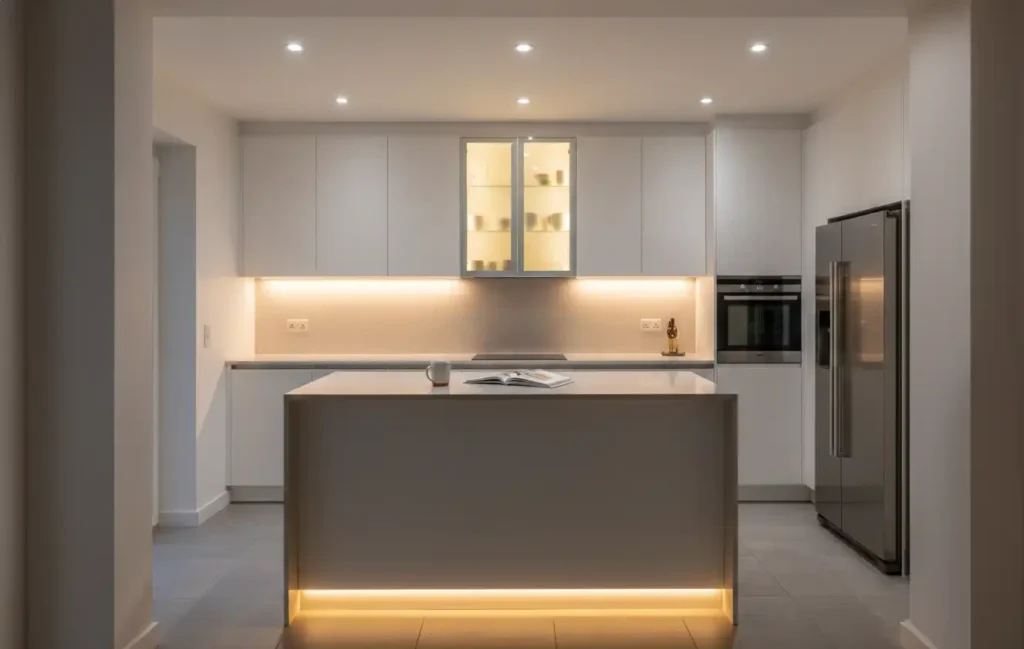
Why Layered Lighting Matters More Than Ever
Kitchens have changed. They’re no longer just for cooking. Families gather there. Kids do homework at the island. Adults work from the counter with a laptop and coffee. That means your lighting needs to do more than just help you see the stovetop.
71%
of renovated kitchens now include under cabinet lights—nearly as common as recessed ceiling lights (73%), according to the 2025 Houzz Kitchen Trends Study.
This shift reflects what designers have known for years: a single overhead light can’t handle everything. It creates shadows on your cutting board. It washes out your beautiful backsplash. It makes the room feel flat when you’re relaxing with family at night.
The solution is a lighting stack—three distinct layers, each with a job. When balanced properly, they eliminate shadows, create depth, and let you adjust the mood from “bright morning energy” to “calm evening dinner.”
"According to the NKBA's 2025 Kitchen Trends Report, 88% of design professionals agree that homeowners now use lighting to create different moods in the kitchen. Another 74% say lighting is being designed to support physical and mental wellbeing."
— National Kitchen & Bath Association, 2025 Kitchen Trends Report
Translation: lighting isn’t decoration anymore. It’s a functional system that affects how you feel and how well you can use your space. The kitchen lighting stack is how professionals deliver that.
The Three Layers Explained
Think of your kitchen lighting like a stereo system. Ambient light is the bass—it fills the room with general brightness. Task lighting is the mid-range—clear, focused, and essential for work. Accent lighting is the treble—the sparkle and detail that brings everything to life.
Each layer has a specific job. Skip one and the whole mix sounds off.
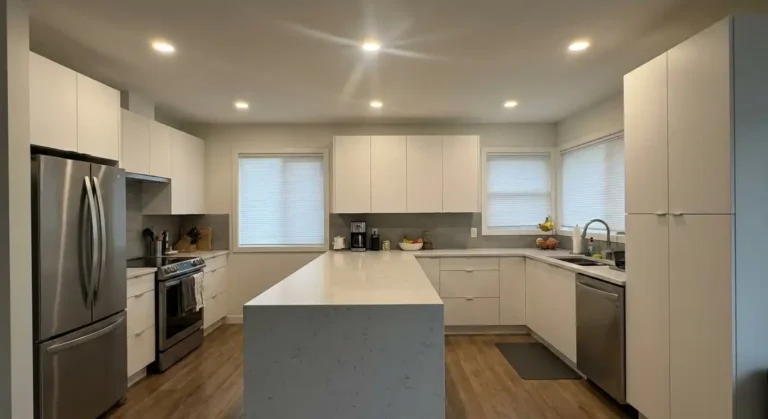
Ambient Light (The Foundation)
General room brightness. Usually from ceiling fixtures or recessed lights. Sets the baseline so you can move safely through the space.
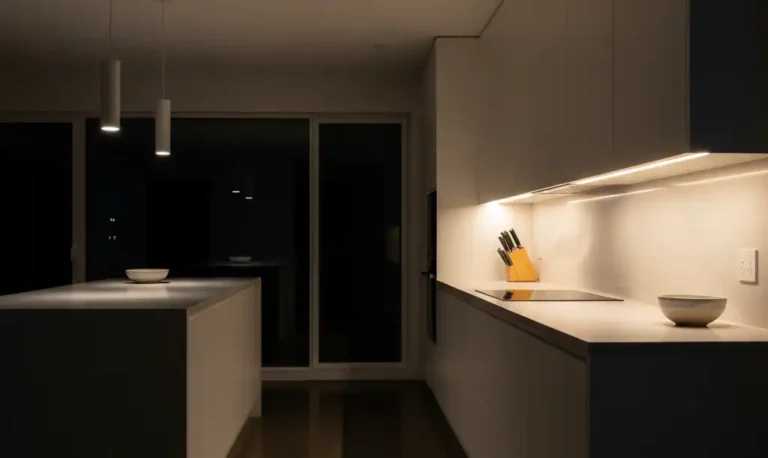
Task Light (The Workhorse)
Focused brightness on work surfaces. Under cabinet lights, pendant lights over islands. Eliminates shadows where you chop, cook, and read recipes.
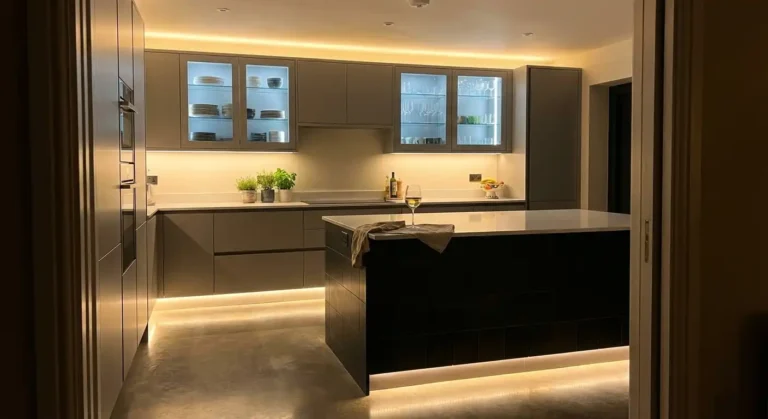
Accent Light (The Finisher)
Most kitchens have decent ambient light. Many have some task lighting. Very few have accent lighting planned intentionally. That's why even nicely renovated kitchens can feel like they're missing something—because they are.
Most kitchens have decent ambient light. Many have some task lighting. Very few have accent lighting planned intentionally. That’s why even nicely renovated kitchens can feel like they’re missing something—because they are.
Layer 1: Ambient Lighting — Your Room's Foundation
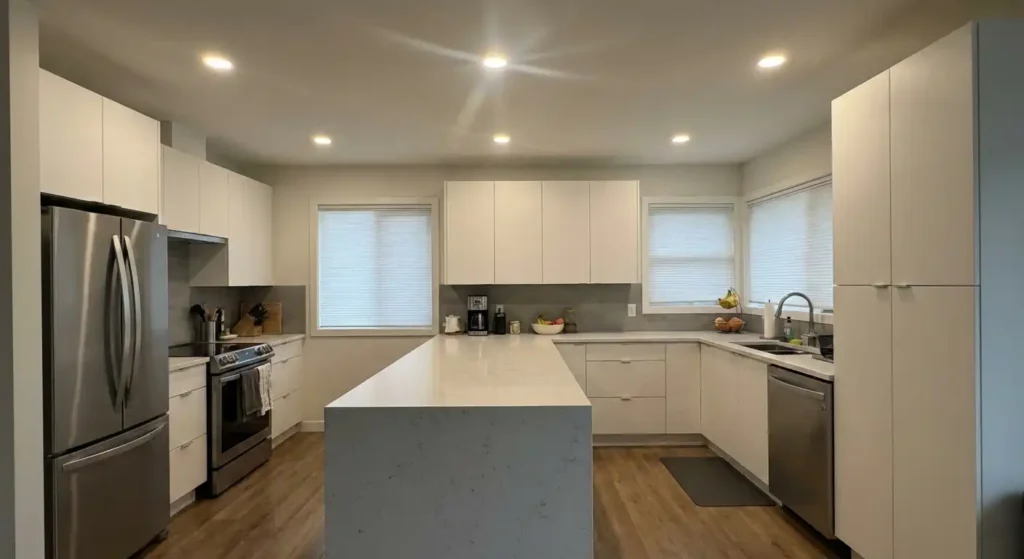
Ambient light is background brightness. It’s what lets you walk into the kitchen at 6 AM without tripping over the dog. In most homes, this comes from recessed pot lights, a central ceiling fixture, or natural light from windows.
The goal is even coverage without harsh spots or dark corners. You want enough light to see everything clearly, but not so much that it feels like a hospital.
Common Ambient Light Sources
| Fixture Type | Best For | Watch Out For |
|---|---|---|
| Recessed Pot Lights | Even coverage across large kitchens | Spacing too wide creates dark spots |
| Flush Mount Ceiling | Smaller kitchens with low ceilings | Single fixture can create shadows |
| Semi-Flush Mount | Adding visual interest overhead | May hang too low in small spaces |
| Track Lighting | Flexible, adjustable coverage | Can look dated if poorly chosen |
A common mistake is putting all your eggs in the ambient basket. Homeowners install eight pot lights and assume they’re done. But ambient light alone creates flat, shadowless spaces that feel more like a dentist’s office than a home.
The fix? Size your ambient layer to be “enough”—not “everything.” Then let task and accent lighting do their jobs. If you’re planning a pot light installation in Ottawa, our team can help you map the right spacing so ambient light supports the stack without overwhelming it.
We’ve helped hundreds of Ottawa homeowners create layered lighting that looks professional and works beautifully.
Same-Day Quote

Layer 2: Task Lighting — The Workhorse
Task lighting is where function meets form. This layer delivers focused brightness exactly where you need it—on countertops, above the stove, over the sink, and anywhere you do detailed work.
The most common (and effective) task lights in kitchens are under cabinet lights and pendant lights over islands. Under cabinet lighting has become almost standard in renovated kitchens because it solves a problem everyone notices: shadows on your cutting board from your own body blocking the overhead light.

Where Task Lighting Belongs
1
Under wall cabinets: LED strips or linear bars that illuminate countertops. Position toward the front edge to reduce shadows and keep glare out of your eyes.
2
Over the island: Pendant lights hung 30–36 inches above the counter surface. Choose fixtures that complement your style but prioritize downward light distribution.
3
Above the sink: A dedicated fixture or pot light ensures you can see dishes clearly while washing.
4
Stove/range hood: Most range hoods include built-in lighting. Make sure it’s bright enough to see your pans clearly.
💡 Pro Tip
Under cabinet lights should be installed toward the front rail of the cabinet, not pushed against the wall. This prevents the "shadow zone" right where you need to chop vegetables. A diffuser channel also makes LED strips look cleaner and more expensive.
Task lighting is the layer most homeowners underinvest in. They assume pot lights will cover it. But overhead light creates shadows every time you stand at the counter. That’s why professional kitchens look so different—they have dedicated task lighting at every work zone.
Layer 3: Accent Lighting — The Detail That Elevates
Accent lighting is what separates a “nice kitchen” from a “wow” kitchen. This layer highlights architectural features, creates depth, and adds warmth after the sun goes down. It’s the difference between a showroom and a show-off.
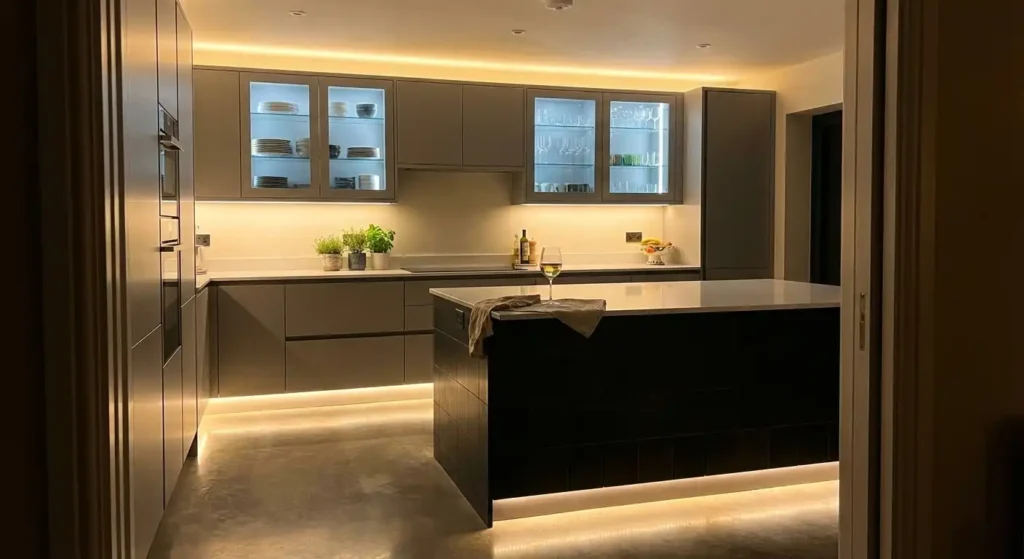
Common accent lighting applications include in-cabinet lighting (inside glass-front cabinets), toe kick lighting along the base of islands, above-cabinet glow strips, and lighting inside pantries or display niches. These touches don’t add much brightness—they add dimension.
Accent Lighting Ideas That Work
- Glass-front cabinet lights: Showcase your dishware and create warmth
- Toe kick LEDs: Soft glow under islands or base cabinets for nighttime navigation
- Above-cabinet strips: Wash light up the ceiling for a floating cabinet effect
- Open shelving LEDs: Draw attention to displayed items without harsh spotlights
Accent lighting is often the layer homeowners skip entirely. But when you dim the overheads at night and your accent lights take over, the kitchen transforms. It feels intentional, warm, and genuinely welcoming.
The key is restraint. Accent lighting should whisper, not shout. A few well-placed strips do more than a dozen competing fixtures fighting for attention.
How Many Layers Does Your Kitchen Need?
Every kitchen benefits from all three layers, but the specific fixtures depend on your layout, ceiling height, and how you use the space. Use the tool below to see a basic recommendation for your situation.
Kitchen Lighting Layer Planner
Answer a few questions to see what your lighting stack might include
Our licensed electricians have installed thousands of kitchen lighting systems across Ottawa, Kanata, Orleans, and Barrhaven.
Same-Day Quote
Getting the Color Temperature Right
Even with perfect layers, wrong color temperature ruins everything. Color temperature is measured in Kelvin (K), and it determines whether your kitchen feels warm and cozy or cold and clinical.
The general rule: warmer tones (2700K–3000K) suit traditional and transitional kitchens with wood cabinets and cream tones. Cooler tones (3500K–4000K) work better in modern kitchens with white cabinets and stainless finishes. But here’s the key insight—your task lighting and accent lighting should match.
| Kelvin Range | Appearance | Best For |
|---|---|---|
| 2700K | Warm, soft yellowish glow | Traditional kitchens, wood finishes, evening ambiance |
| 3000K | Warm white, slightly less yellow | Most versatile choice for residential kitchens |
| 3500K | Neutral white | Transitional styles, mixed warm/cool finishes |
| 4000K | Cool white, more blue | Modern kitchens, all-white designs, commercial spaces |
If you’re unsure, 3000K is the safest bet for most Ottawa homes. It’s warm enough to feel inviting without making your white countertops look yellow. And if you really can’t decide, adjustable CCT (color-changing) fixtures let you tune the temperature after installation.
5 Mistakes That Ruin Kitchen Lighting
We’ve seen hundreds of kitchens across Ottawa. These are the errors that come up again and again—and they’re all fixable.
1
Relying only on pot lights: Overhead lighting creates shadows at every work surface. Add under cabinet lights and your counters transform.
2
Mismatched color temperatures: Mixing warm under cabinet lights with cool ceiling lights makes the room feel disjointed. Pick one temperature and stick with it.
3
Under cabinet lights mounted too far back: Lights pushed against the wall cast shadows where you need to see. Mount near the front edge of the cabinet.
4
No dimming capability: A kitchen that’s always at full brightness feels harsh at night. Dimmers let you adjust for morning coffee vs. evening dinner.
5
Visible LED dots (hotspots): Bare LED strips show individual diodes that reflect off counters. A diffuser channel smooths the light and looks far more professional.
The biggest mistake of all? Treating lighting as an afterthought. When you plan your lighting stack early—ideally before or during renovation—you can run wires where they need to go and avoid visible cords or surface-mounted tracks that scream “added later.”
When to DIY and When to Call a Professional
Some lighting upgrades are simple enough for a confident homeowner. Others require permits, proper wiring, and electrical know-how. Here’s how to decide.
DIY-Friendly Upgrades
Plug-in LED strip lights, battery-powered cabinet lights, and swapping standard bulbs are all reasonable DIY projects. These options work well for renters or anyone testing the concept before committing to hardwired fixtures.
Call a Licensed Electrician

Hardwired under cabinet systems, new pot light installations, adding circuits for island pendants, and installing dimmer switches that require new wiring should all involve a licensed electrician. In Ontario, electrical work requires ESA permits and inspections for good reason—improper wiring is a fire hazard.
If you’re planning a kitchen renovation or want your lighting stack done right the first time, our lighting installation team can handle everything from planning to final inspection. We’ll make sure the layers work together and the wiring stays invisible.
Putting It All Together
The kitchen lighting stack isn’t complicated once you see it clearly. Three layers, each with a job.
Your Kitchen Lighting Stack Checklist
- Ambient: Even overhead brightness from pot lights or ceiling fixtures. Enough to navigate safely, not so much it feels clinical.
- Task: Focused light on work surfaces. Under cabinet LEDs are the standard. Pendants over islands add function and style.
- Accent: Depth and warmth through in-cabinet lights, toe kicks, or above-cabinet strips. The finishing touch that makes a kitchen feel designed.
- Color Temperature: Match all three layers. 3000K works for most Ottawa homes.
- Controls: Add dimmers where possible so you can adjust mood from bright morning to calm evening.
When these three layers work together, your kitchen stops being a room with lights in it. It becomes a space that supports how you cook, gather, and live. And that feeling—the one you notice in high-end showrooms and designer homes—becomes part of your everyday experience.
If you’re ready to upgrade your kitchen lighting or want expert guidance on what your space needs, reach out for a free estimate. We’ll help you build a lighting stack that looks professional, works beautifully, and makes your kitchen feel like the heart of your home.
Share on Social Media:
Hey! I’m Matt Fortin, Founder & Master Electrician of Ottawa Electric. I have 20+ years of electrical industry experience across residential, commercial, and heavy industrial work. I lead our team with a focus on safety, quality workmanship, and clear communication.
Table of Contents

Same-day Quote
Get Professional Kitchen Lighting Installation in Ottawa
Let's Design Your Kitchen Lighting Stack
Free estimates. Licensed electricians. ESA-compliant installations across Ottawa and surrounding areas.
Same-Day Quote