

Where to Install a Carbon Monoxide Detector in Ottawa Homes
Real Layouts. Real Mistakes.
- 14 min read
- Published on:
- Updated on: May 19, 2026
- 14 min read
- Published on:
- Updated on: May 19, 2026


Quick Summary
The rules changed on January 1, 2026. This carbon monoxide detector installation guide shows you exactly where CO alarms need to go — room by room, floor by floor — so your family stays safe and your home stays code-compliant.
A Car Running in a Vanier Garage Sent 10 People to Hospital
On the morning of December 23, 2024, someone in the Vanier neighbourhood left a car running inside an attached garage to warm it up. Within hours, 10 people — including four children — were rushed to the hospital with carbon monoxide poisoning. The invisible gas had seeped from the garage straight into the living areas. Proper carbon monoxide detector installation could have alerted that family before anyone got sick.
A few months later, Ottawa Police responded to another carbon monoxide tragedy. A vehicle had been left idling in a closed garage, and one person died. The family, experiencing their first winter in Canada, didn’t know the danger. Nine other family members were saved only because officers arrived in time.
These aren’t rare stories. They happen in Ottawa every winter. And here’s what makes it worse: in many of these homes, either there was no carbon monoxide detector at all — or the detectors were in the wrong spots.
That’s why we wrote this guide. We’re going to show you exactly where to install carbon monoxide detector units in your Ottawa home, based on the brand-new 2026 Ontario Fire Code rules, real home layouts, and the most common placement mistakes we see as a licensed electrician in Ottawa.

What Changed on January 1, 2026
Ontario updated the Fire Code, and the new rules are stricter than what most homeowners expect. Before this change, you only needed CO alarms near sleeping areas if your home had a fuel-burning appliance or attached garage. That was it. No alarms required on other floors.
Now the rules say something different.
If your home has a furnace, gas fireplace, gas stove, wood stove, or an attached garage, you need CO alarms in two locations:
1
Adjacent to each sleeping area — that means right outside each bedroom cluster, close enough to wake you up
2
On every storey of your home — including the basement, even if nobody sleeps there
That second part is the big change. Plenty of Ottawa homes have a furnace in the basement and bedrooms on the second floor. Under the old rules, you only needed a CO alarm upstairs. Under the new rules, you need one on every level — basement included.
The full details of the 2026 changes are available on the Ontario Fire Code update summary published by municipal fire services across the province.
Why Your Carbon Monoxide Detector Placement Matters More Than You Think
Here’s something most people get wrong about carbon monoxide: it doesn’t behave like smoke.
Smoke rises. That’s why smoke detectors go on the ceiling. But CO has nearly the same weight as air. It mixes freely throughout a room instead of pooling at the top or bottom. This means a CO detector doesn’t have to be on the ceiling to work. It just needs to be close enough to sleeping areas to wake you up before levels become dangerous.
And here’s the tricky part — most CO alarms won’t sound a full alarm until they detect higher concentrations, often around 70 parts per million sustained over time. At lower levels, you might feel headaches, nausea, and confusion, but the alarm stays silent. That’s why placement matters so much. The closer the detector is to where gas enters your living space, the faster you’ll know something is wrong.
of carbon monoxide incidents in Ontario happen inside homes
A detector buried in the far corner of your basement won’t help the family sleeping two floors up. One shoved behind a couch on the main floor won’t do its job either. Placement isn’t about checking a box. It’s about getting warned in time.
Our licensed electricians inspect detector placement and install hardwired, interconnected CO alarms across your entire home. Free estimates, no obligation.
Same-Day Quote

Where to Install Carbon Monoxide Detector Units: Room by Room
Let’s answer the most common question: where to install carbon monoxide detector units so they actually protect you. Here’s exactly where detectors go and why — based on Ontario Fire Code requirements and manufacturer guidance.
Outside Every Bedroom Cluster

This is your first priority. Place a CO alarm in the hallway directly outside your bedrooms. If all the bedrooms are in one hallway, a single unit covers that cluster. If bedrooms are on different sides of the house or on separate floors, each area needs its own detector. The goal is simple: if CO reaches dangerous levels at 3 a.m., the alarm needs to wake everyone up.
On Every Level of Your Home

Under the 2026 rules, every storey needs coverage. That includes the basement — especially if your furnace, boiler, or water heater lives down there. It also includes the main floor, even if it only has a living room and kitchen. CO doesn't stay on one level. It migrates through stairwells, HVAC ducts, and open floor plans.
Near the Attached Garage Entry Door
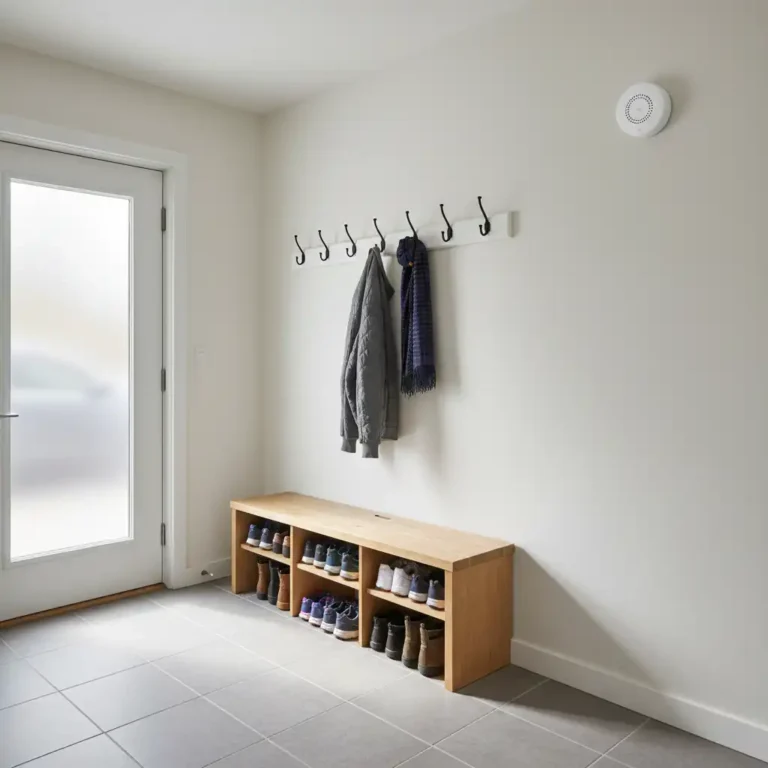
If you have an attached garage, this is a high-risk zone. Cars, lawnmowers, snowblowers, and generators all produce CO. Place a detector near the door that connects the garage to your living space. Not inside the garage — the extreme temperatures cause false alarms. Inside the house, near that entry point.
In the Utility Room Area

Your furnace room, boiler room, or mechanical area is where most CO originates in a home. While the Fire Code focuses on sleeping areas and storeys, manufacturers often recommend additional coverage near fuel-burning equipment. Think of this as extra protection that goes beyond the minimum.
Where NOT to Install a CO Alarm
Don't place them inside the garage, in bathrooms (humidity triggers false alarms), directly above a stove or oven, near open windows, or within 5 feet of any fuel-burning appliance. These spots create nuisance alarms that lead homeowners to disconnect the unit entirely — which defeats the entire purpose.
Three Ottawa Home Types: Where Alarms Actually Go
We install carbon monoxide detectors in Ottawa homes every week. And the most common question homeowners ask is “how many do I need?” The answer depends on your layout. Here are three home types we work with constantly in the Ottawa region.
Layout 1: Two-Storey With Basement (Barrhaven / Orleans)
This is the most common family home we see in Barrhaven, Orleans, and Kanata subdivisions built in the last 25 years. Three floors — basement, main, and second — with the furnace in the basement and all bedrooms upstairs.
-
Basement — near the bottom of the stairwell, within earshot of anyone coming downstairs
-
Main floor — in the hallway, especially if there’s a door connecting to an attached garage
-
Second floor — in the hallway outside the bedrooms
Layout 2: Bungalow With Finished Basement (Older Ottawa Neighbourhoods)
Bungalows in Alta Vista, Manor Park, and the Glebe often have the furnace in an unfinished or semi-finished basement, with all living and sleeping areas on one floor above.
-
Basement — near the stairwell, not inside the furnace room itself
-
Main floor — in the hallway outside the bedrooms
Layout 3: Townhome With Attached Garage (Kanata / Stittsville)
Newer townhomes often have a garage at ground level, the main living area on the second floor, and bedrooms on the third. That’s three levels and a garage — so coverage needs are higher.
- Ground floor — near the garage entry door, inside the living space
- Second floor (main living area) — central location
- Third floor — in the hallway outside bedrooms
The 5 Most Common CO Detector Mistakes We See in Ottawa
We’ve been in hundreds of Ottawa homes, and these mistakes show up again and again. Some are harmless. Some are dangerous.
1
Only putting detectors on the bedroom floor. This was technically code-compliant before 2026, but it left the rest of the house uncovered. If CO builds in your basement for hours before reaching the second floor, you could be breathing it all night. Now the code requires every storey — so fix this one first.
2
Placing the detector inside the garage. Garages get extremely hot in summer and freezing in winter. That temperature swing causes constant false alarms. After a few chirps at 2 a.m., most homeowners pull the batteries out. Install the detector inside the house, near the garage entry, not in the garage itself.
3
Ignoring the basement because “nobody sleeps there.” Your furnace doesn’t care who sleeps where. If it malfunctions, CO fills the basement first and works its way up. A detector in the basement gives you the earliest possible warning.
4
Using expired detectors. CO detectors have a lifespan of 5 to 10 years, depending on the model. After that, the sensor degrades and the unit becomes unreliable. Check the manufacture date on the back of every unit. If it’s past its lifespan, replace it — even if it still “chirps” during testing.
5
Confusing CO with CO₂. This one comes up constantly in online forums and even in some store product listings. Carbon monoxide (CO) is the invisible, odourless gas that can kill you. Carbon dioxide (CO₂) is what you exhale. They are completely different. Make sure the device you buy says “carbon monoxide” and carries a CSA-6.19 or UL 2034 certification.
When one alarm sounds, they all sound. Our team wires interconnected smoke and carbon monoxide detector combos for full-home coverage — the safest setup available.
Same-Day Quote
How Many Carbon Monoxide Detectors Does Your Home Need?
Use this quick tool to find out. Answer four questions about your Ottawa home, and we’ll tell you the minimum number of carbon monoxide detector units required under the 2026 Ontario Fire Code — plus exactly where each one should go.
CO Detector Placement Calculator
Answer 4 quick questions about your home
How to Install Carbon Monoxide Detector Units: Hardwired vs. Battery vs. Plug-In
This is one of the most heated debates we see online — and in our customers’ kitchens. Each type has real trade-offs. Here’s an honest comparison based on what we recommend to Ottawa homeowners.
| Feature | Hardwired | 10-Year Sealed Battery | Plug-In |
|---|---|---|---|
| Power source | 120V wiring + battery backup | Built-in lithium battery | Wall outlet + battery backup |
| Interconnection | ✔ Yes (all units alarm together) | ✘ Most models: No | ✘ Rarely available |
| Installation | Licensed electrician required | DIY — mount and forget | DIY — plug into outlet |
| Reliability | ✔ Highest — always powered | Good for 7–10 years | Good, but outlet can be bumped |
| Best for | Families, multi-floor homes, new builds | Rentals, single-room coverage, quick compliance | Basements, rooms with no existing wiring |
| Approx. cost per unit | $80–$180 (installed) | $35–$60 | $40–$65 |
| Our recommendation | ✔ Best overall choice | Good temporary solution | Acceptable backup option |
For most Ottawa families, we recommend hardwired, interconnected units. When one detector sounds, they all sound — so the alarm in the basement wakes up the kids on the third floor. Many homeowners choose a combo smoke and carbon monoxide detector for hallways, which reduces clutter and simplifies testing. That interconnection is the safety advantage you can’t get with standalone battery units.
If your home doesn’t have existing wiring for detectors, our team can run new circuits and install a full interconnected system in a single visit. It’s one of the most cost-effective safety upgrades you can make — and it’s the kind of carbon monoxide detector installation that an experienced electrician in Ottawa can finish in a few hours.
What to Do in the First 60 Seconds When Your CO Alarm Goes Off
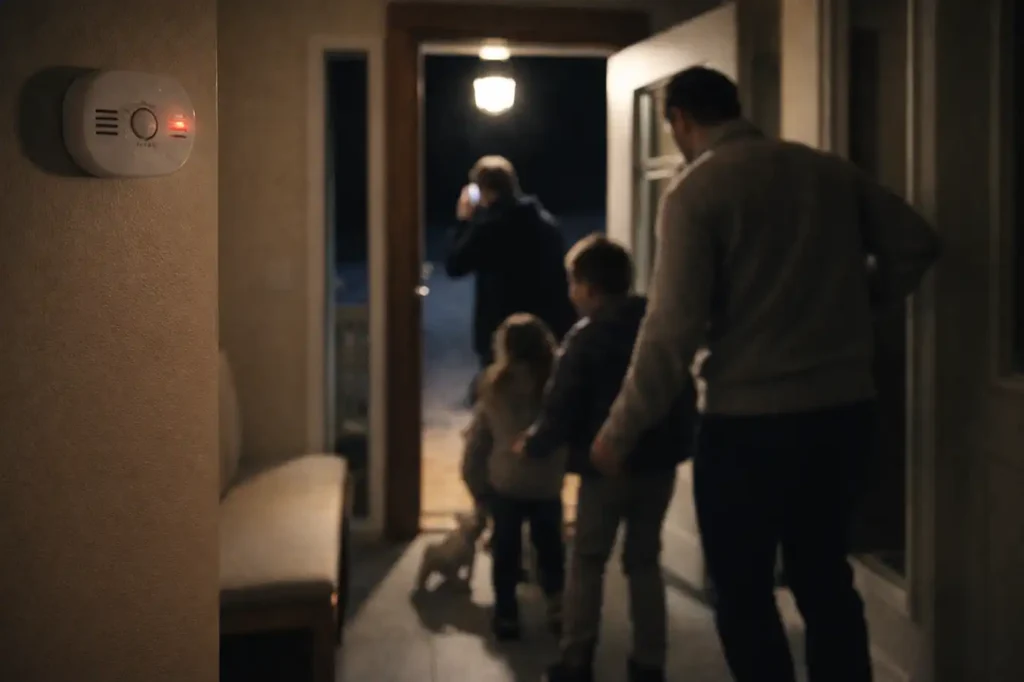
Most people’s first instinct is to open all the windows. That sounds smart, but fire departments across Ontario have pointed out a surprising problem with that approach: if you ventilate the house before firefighters arrive, they may have a harder time finding the source of the leak.
- Get everyone out of the house immediately. Don’t look for the source. Don’t try to fix anything. Just leave.Call 911 from outside. Tell them your carbon monoxide alarm went off and the address.Don’t re-enter the house until fire services have cleared it. CO is invisible and odourless — you can’t tell if it’s safe by how the air “feels.”Count every person and pet. Make sure everyone got out before firefighters arrive.
After the immediate emergency, you’ll need a professional to inspect your fuel-burning equipment. A cracked heat exchanger, a blocked flue, or a faulty gas appliance is usually the cause. Our team handles the electrical side — making sure your detectors are working, properly placed, and connected — and we can coordinate with HVAC technicians for the full safety picture.
Protect Your Family Before WinterMost CO emergencies in Ottawa happen between November and March. Get your detectors inspected and upgraded now — before the cold weather pushes your furnace to its limits.
Same-Day Quote
What to Look for on a Carbon Monoxide Detector Before You Buy
Not every device on the shelf is created equal. Some budget CO detectors sold online don’t meet Ontario’s required standards. Before you buy any unit, flip the box over and look for two certification marks:
CSA-6.19 — This is the Canadian standard for residential carbon monoxide alarms. If it has this mark, it’s been tested and approved for Canadian homes.
UL 2034 — This is the North American standard. You’ll see it on most quality brands available in Canada.
If a detector doesn’t carry one of these certifications, don’t install it. It might technically “detect” CO, but it hasn’t been verified to alarm at the thresholds that keep your family safe. Look for these marks the same way you’d look for an ESA certification sticker on electrical work — they tell you the product meets the standard.
Pro Tip
A detector with a digital display gives you earlier awareness. Most standard units won't alarm until higher CO concentrations build up, but a display model shows ppm readings in real time. It won't replace the alarm — it just gives you extra information to act on sooner.
The Simplest Way to Handle Carbon Monoxide Detector Installation
Here’s the honest summary. If your Ottawa home has a gas furnace, gas fireplace, wood stove, or attached garage, you now need CO alarms adjacent to every sleeping area and on every floor. That’s the 2026 rule.
The simplest way to handle it? Walk through your home floor by floor. Count the levels. Identify where people sleep. Check the manufacture dates on your existing detectors. If anything is missing, expired, or in the wrong spot, fix it now — not when the weather drops and your furnace starts running hard.
And if you want hardwired, interconnected protection — the kind where a basement alarm wakes up the entire house — that’s exactly what we do. Reach out to our team for a free estimate, and we’ll make sure every detector in your home is where it needs to be.
Your family’s safety isn’t something to leave to guesswork.
FAQs
Do I need a CO detector if my home is all-electric (no gas)?
If your home has no fuel-burning appliances and no attached garage, the Ontario Fire Code doesn’t require CO alarms. However, if you have an attached garage — even without gas appliances — you still need them. Vehicles produce significant CO. It’s also worth noting that some homeowners add gas fireplaces or barbecues later without updating their detectors.
Should I get a combo smoke and CO detector?
Combo units can be a practical choice — especially for hallways where you’d need both alarms anyway. They reduce clutter and simplify maintenance. Just make sure any combo unit you buy carries both the appropriate smoke detector certification and the CSA-6.19 or UL 2034 CO certification.
My CO alarm keeps chirping. What does that mean?
A single chirp every 30 to 60 seconds usually means the battery is low or the unit has reached end of life. Check the manufacture date on the back. If the detector is more than 7 years old, replace it entirely. A continuous alarm pattern (4 beeps, pause, repeat) is the real CO warning — get out of the house and call 911.
Is it the landlord's or tenant's responsibility to install CO alarms?
In Ontario, landlords are responsible for providing working smoke and CO alarms that meet the Fire Code. Tenants are responsible for not tampering with them and for notifying the landlord if an alarm isn’t working. Under the 2026 update, landlords of at-risk properties must ensure alarms are on every storey.
Can I install hardwired CO detectors myself?
In Ontario, any work involving your home’s electrical wiring must be done by a licensed electrician and may require an ESA permit. Battery and plug-in units are fine as DIY installs, but hardwired interconnected systems need professional installation to ensure safe connections and code compliance. Our smoke and CO detector installation service covers everything — wiring, mounting, testing, and interconnection.
Share on Social Media:
All PostsMatt FortinHey! I’m Matt Fortin, Founder & Master Electrician of Ottawa Electric. I have 20+ years of electrical industry experience across residential, commercial, and heavy industrial work. I lead our team with a focus on safety, quality workmanship, and clear communication.
Table of Contents

Ready to protect your home with complete peace of mind?
Get professional, code-compliant installation and full documentation from Ottawa’s trusted licensed electricians.
Same-Day Quote